GSA SER Tier 1 Link Building
What Exactly Is GSA SER Tier 1 Link Building?
In the world of automated SEO, GSA SER tier 1 link building refers to the practice of using GSA Search Engine Ranker to create high-quality backlinks directly to your money site or primary pages. Unlike lower tiers designed purely for indexing power, tier 1 links are meant to be seen by both search engines and real users. They carry the most weight, so the focus shifts from sheer volume to relevance, platform diversity, and contextual value. When done correctly, this layer acts as a powerful, scalable foundation that amplifies your overall off-page SEO without triggering penalties.
Why Tier 1 Links Demand a Different Approach
GSA SER is often associated with spam, but that reputation comes from users who skip the tiered strategy entirely or blast their money site with unreadable content on low-quality platforms. A genuine GSA SER tier 1 link building strategy treats the software as a precision tool. The goal is to mimic natural link acquisition — just at a speed and scale impossible to achieve manually. The links you build here must pass strict filters for domain authority, spam scores, and content uniqueness. If you wouldn’t manually place a link on that page, it shouldn’t be in your tier 1 project.
Core Principles That Make Tier 1 Links Safe and Effective
- Contextual relevance matters above all. Links appear inside articles, not comment sections or random forums.
- Strict platform filtering. Only verified, editable, and indexed platforms — think WordPress, Drupal, Joomla, or general HTML sites that allow article posting.
- Unique, high-quality content. Use heavily spun articles at the sentence and paragraph level, or, ideally, dedicated hand-written content for a smaller, ultra-premium tier 1 list.
- Human-readable anchors. Anchor text ratios lean heavily on branded, naked URL, generic, and long-tail partial matches. Exact-match anchors stay under 1%.
- Slow, natural velocity. Daily link creation is capped, and drip-feeding is enabled to avoid sudden spikes.
How to Build a Tier 1 Campaign in GSA SER
A well-built tier 1 campaign is the difference between a penalty and a sustained ranking boost. Follow these steps to structure your GSA SER tier 1 link building setup from scratch.
1. Curate an Elite Verified Site List
Do not rely on GSA SER’s built-in scraping alone. You need a hand-picked or heavily filtered list of target platforms. Focus on:
- Web 2.0 blogs (WordPress.com, Blogger, Tumblr blogs that still allow dofollow links)
- Article directories with decent domain ratings
- Social network profiles that allow bio links or posts
- Document sharing sites (selectively, for branding and referral traffic)
- Niche-specific forums where a profile link or a crafted signature adds value
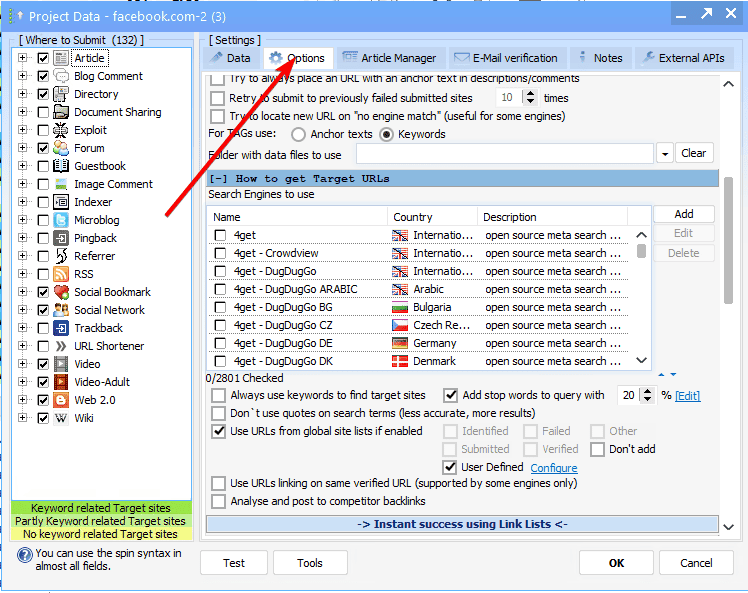
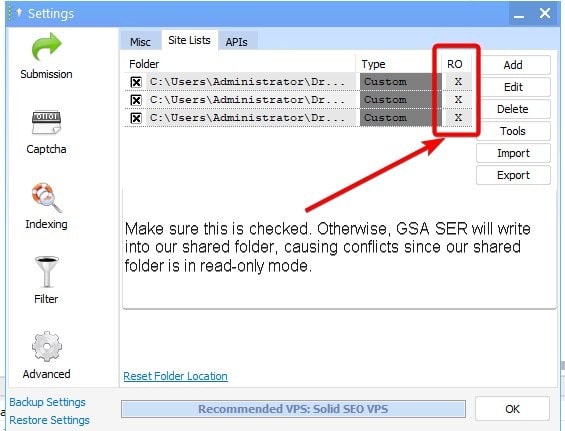
Import this curated list into GSA SER and disable global site lists. Only allow the tool to post to sites you’ve pre-approved for tier 1.
2. Configure Project Options for Maximum Safety
Inside the project settings, your choices are critical. Under the "Where to Submit" tab, enable only the engines that match your verified list (e.g., Article, Blog Comment — but with extreme caution, Social Networks, etc.). Then lock down the filters:
- PR (PageRank) / DA filter: Set a minimum domain authority threshold, typically DA 20 or higher.
- Spam score & OBL (outbound links): Reject pages with more than 50 outbound links and any domain flagged with high spam scores.
- Language and country: Target English-speaking countries and reject sites in non-relevant languages.
- Skip sites with certain words: Ban words like "seo," "cheap," "casino," "pharma" unless you're specifically in those niches.
3. Feed It Premium Content
GSA SER’s content manager is the heart of your tier 1 quality. Upload a pool of at least 10–15 extensively spun articles (spintax at sentence and word level) with embedded anchor HTML that ties back to your money page. For the best results, use placeholder-friendly macros like %link% and ensure each article is 500–800 words long. If you can afford it, push unique, manually written content through the tool — the output quality increases dramatically.
4. Anchor Text Engineering
Create an anchor plan with a base of 70% branded and URL anchors, 20% natural phrases (“click hereâ€, “read moreâ€, “learn about Xâ€), and only 10% partial-match keywords. Store this in a .txt file and let GSA SER pull randomly. In the project’s anchor tab, set strict percentage splits and enable the option to website “only use anchor once per domain†to avoid footprints.
5. Drip-Feed Scheduling
Under "Scheduler," limit submissions to 5–20 verified links per day. Enable the “pause project after X verified links†feature and set it to restart after 24–48 hours. This mimics natural growth and keeps the campaign running steadily for months without manual intervention.
Common Mistakes That Ruin Tier 1 Campaigns
Even seasoned users slip up. Avoid these pitfalls when setting up GSA SER tier 1 link building:
- Using the same content across all tiers. Tier 1 content must be noticeably better than tier 2 or 3 spam. Cross-tier duplication is a fast track to deindexing.
- Ignoring indexing. High-quality tier 1 links often sit on fresh subdomains that need a ping, a post to an indexer, or a few tier 2 links just to get crawled. Build a lightweight tier 2 pointing to your tier 1.
- Allowing auto-generated emails. Use catch-all email domains or forwarders instead of temporary mail boxes. Sites with legitimate email verification tend to have higher trust and stickiness.
- Setting threads too high. More threads mean faster posting, but for tier 1, you need slower, more deliberate submissions to avoid server-level rejection and maintain account quality.
- Skipping link rotation. Don’t point every tier 1 link to the exact same URL. Spread them across your homepage, pillar pages, and key inner pages using URL profile rotation.
Frequently Asked Questions
Is GSA SER tier 1 link building safe for a new website?
It can be, provided you use an extremely conservative approach. For a brand-new domain, limit tier 1 to curated Web 2.0 blogs with unique, hand-written content and a max of 1–2 links per day for the first few months. Let the domain age naturally while you only add ultra-relevant brand anchors. A new site blasted with any automated tool can trigger sandbox filters, so slow everything down.
How do I know if my tier 1 links are indexed?
You can check manually via the “site:†operator or use GSA’s built-in indexing checker. However, a better workflow is to connect GSA SER to an indexing service API or create a dedicated “tier 1 indexer†project that builds low-volume tier 2 links (social bookmarks, ping services, RSS feeds) pointed at your tier 1 URLs. Monitor the Verified URLs list and spot-check a sample weekly.
How many tier 1 links do I really need?
The obsession with numbers leads to destruction. A campaign that builds 100 high-retention, contextual tier 1 links on domains with real traffic and authority is infinitely more powerful than 10,000 throwaway comments. Quality first. If you maintain a steady 50–100 links per month per money site, with a high percentage sticking, you’re in a very strong position.
Can I reuse the same article content across different Web 2.0 platforms?
Avoid exact duplicates in tier 1. While GSA can spin content, it’s safer to create 5–7 completely separate unique articles and then spin variations of each. That way, even if the core messages overlap, the semantic structure differs enough to avoid duplicate-content filters. For platforms like WordPress.com or Blogger, they actively scan for reused spun content, so investing in uniqueness pays off.
Should I use private proxies for tier 1 link building?
Absolutely. Dedicated private proxies are non-negotiable. Your tier 1 accounts and created sites need consistent IPs to avoid mass account bans. Use proxy rotation but tie specific proxies to specific platforms to simulate regular user behavior. Avoid public or shared proxies entirely for any tier that touches your money site.
Maintaining Long-Term Success with Tier 1 Links
A static tier 1 eventually decays. Sites delete inactive blogs, platforms change link attributes, and domains lose authority. Schedule a monthly health check. Pull your verified links into a spreadsheet, run a batch analysis through a tool like Scrapebox, and check for “nofollow†changes, deletions, or deindexed pages. Replace lost links with fresh ones. Over time, you’ll nurture a growing, resilient web of high-quality properties that reinforce your site’s trust without setting off alarm bells.
When you respect the tiered structure and treat your first layer with the care it deserves, GSA SER tier 1 link building becomes one of the most scalable, cost-effective strategies in modern SEO. It bridges the gap between manual outreach and pure automation, giving you control over quality while still operating at machine speed.